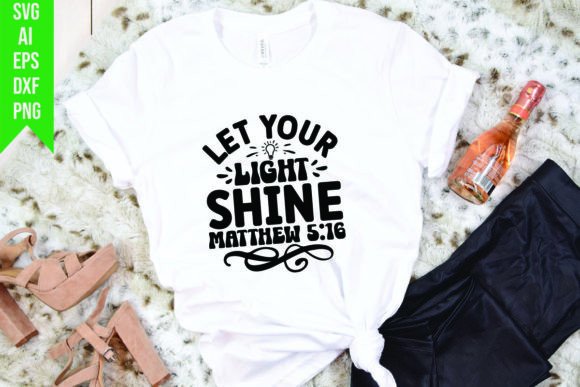
Let Your Light Shine Matthew 5 16 Graphics for T-Shirt Designs
Every time I open a new graphic design asset for my online shops, my first question is whether it will actually help a paying customer finish a project—or just waste their download limit. When I reviewed Let Your Light Shine Matthew 5 16, I was preparing a small faith-inspired collection for Etsy and Creative Fabrica, planned around printable wall art, subtle apparel, and simple sticker sheets. I needed a design that could sit across multiple product types without forcing a full rebrand every time.
The immediate impression is warm and approachable. The typography carries a gentle, script-forward personality that leans slightly feminine but stays neutral enough for unisex t-shirt designs, tote bags, and devotional journals. It doesn’t scream for attention the way heavy urban streetwear graphics do. Instead, it reads like something you’d find in a boutique gift shop, a church bookstore, or a cozy nursery. That makes the target buyer fairly broad: crafters looking for bible verse SVG files, Etsy sellers building printable scripture bundles, Cricut users making heat-transfer vinyl shirts for retreats, and even bloggers designing daily devotional social media graphics. The mood is uplifting without being overly cutesy, which gives it longer shelf life across seasons.
What You Actually Receive in the File Package
The product description lists a generous asset stack—100 editable files, color-changeable across the set, with source formats that include AI, EPS, SVG, DXF, high-resolution 300-dpi PNG on transparent backgrounds, and JPG files alongside pre-made high-quality mockups. In practice, that means you can open the vector originals and tweak every curve, change lettering color in one click, or immediately drop a ready-to-preview PNG onto a t-shirt or mug mockup without extra design work. For sellers, this file variety removes a ton of friction. I can keep the layered AI and EPS files as masters for subscription box bundles, use the SVG for print-on-demand platforms that require clean cut lines, and offer the JPG to customers who want a quick print-at-home download.
One detail that often gets overlooked: high-quality mockups included in the package. Having a professional presentation already in the folder means you don’t need to stage a separate photo shoot or build a digital mockup from scratch. This cuts listing creation time significantly. For a design like Let Your Light Shine Matthew 5 16, where the visual personality shines best on soft cotton textures, kraft paper backgrounds, or clean ceramic mugs, the included mockups let you immediately create a cohesive product collection preview.
Testing It Across Real Product Scenarios
I rarely trust a design asset until I run it through a few practical formats. Here’s where Let Your Light Shine Matthew 5 16 performed well and where I’d exercise caution.
Product Types That Work Immediately
- SVG products and Cricut projects: The SVG file opened cleanly with ungrouped elements and clean cutting lines, ideal for adhesive vinyl decals, heat transfer vinyl shirts, and tote bags.
- Sublimation designs: The 300-dpi PNG with transparent background pressed beautifully onto polyester t-shirts, mugs, and tumbler wraps without color bleed at the edges.
- Printable wall art and greeting cards: The artwork had enough resolution to scale to 8x10 inches for a framed print or trim down for 5x7 folded cards without pixelation.
- Canva templates and social media graphics: I dropped the design into a Canva layout as a main focal point and it held visual hierarchy well, especially when paired with a subtle serif subtitle beneath.
- Planner stickers and scrapbooking kits: Resized to 2 to 3 inches wide, the script remained legible and the motif stayed crisp for sticker sheets.
Where You Should Proceed Carefully
- Tiny sticker details: The lettering has delicate flourishes that start to lose clarity below 1.5 inches in print. It’s not unusable, but I wouldn’t make it the main graphics on a micro sticker sheet without a bold version.
- Crowded product thumbnails: On a cluttered Etsy search page, the design’s subtle charm could get lost next to brighter, high-contrast competitors. You need to test how it looks at 200 pixels wide—sometimes adding a soft color block behind the text helps legibility.
- Dark backgrounds without adjustment: The original art uses mid-tone outlines. On black apparel mockups, parts of the lettering become hard to read unless you invert the colors or add a light outer glow. Always preview on both light and dark canvas before listing.
- Low-resolution print products: The JPG is high resolution but if you scale it down for a miniature box or a tiny keychain plate, double-check that the 300-dpi source was not downsampled accidentally when converting.
Design Niche Appeal and Buyer Psychology
When I build a product listing around a scripture-based design, I think about search intent. Shoppers looking for Let Your Light Shine Matthew 5 16 are often searching with emotion rather than just utility—they want a meaningful gift, Sunday school craft item, or personal reminder. This makes the typography style more critical than the message alone. The script here is rounded and friendly, which connects well with women’s retreat organizers, new parents decorating a nursery with faith-centered art, and minimalist Christian influencers. There’s a handmade, almost hand-lettered feel that suggests warmth. If your brand identity leans modern calligraphy, this fits right in alongside other inspirational quotes.
That said, it’s not a bold gothic statement for youth group hoodies or a loud festival tee. It feels more at home in a serene, lifestyle-oriented collection. I’d place it in a bundle with other encouraging verses presented in coordinating serif fonts and soft watercolor backgrounds. This approach builds brand consistency and raises the perceived value of each listing because buyers can imagine a whole aesthetic, not just one t-shirt design.
Organizing the Assets for Customer Delivery
From a digital product creator’s perspective, the way asset files are arranged matters almost as much as the design itself. With 100 editable files and multiple formats, I immediately organized them into subfolders by use: Print-Ready PNG, Vector Source (AI, EPS, SVG, DXF), Mockup Previews, and JPG for Quick Previews. This reduces confusion and helps a commercial license holder get straight to work. If you plan to resell the design inside a template bundle, rename the files clearly and include a simple readme. Clarity builds customer trust and lowers support inquiries.
Presentation and Thumbnail Strategy
Mockup previews can make or break a faith-inspired product line. I tested the design on a cream linen pillow mockup, a kraft gift tag, and a soft-blue t-shirt. The included high-quality mockups let me build a cohesive gallery in a few minutes. However, I always take an extra step: I replace one or two product mockups with my own to avoid the “same stock image as everyone else” stamp. Even a slight repositioning makes the listing feel unique. Pay attention to visual storytelling—pair the design with a coffee mug and a Bible, or show it on a nursery wall above a crib. This builds an emotional scene that raises click-through potential and nudges a browser toward purchase.
Font Pairing and Brand Versatility
One of the biggest advantages of an editable color-changeable asset is font pairing experimentation. With the vector files, I layered a clean sans-serif subtitle below the script, then tried a classic serif for a more formal look. A modern handwritten font for the supporting text gave it a casual journaling vibe, while a gentle serif with open tracking made it look like high-end stationery. The design didn’t fight any of those combinations, which means you can repurpose the same core graphic across multiple product lines—printable wall art, prayer journals, apparel, and Facebook cover graphics—with only minor tweaks. For shops that rely on visual hierarchy and brand identity, that flexibility adds real commercial design value.
Licensing and Commercial Use Checks
Before you list anything on Etsy or upload to a print-on-demand platform, confirm the commercial license for Let Your Light Shine Matthew 5 16. The product description indicates editable source files, which typically suggests commercial use is allowed, but always review the specific terms. I look for whether it permits use on physical end products for sale, in digital download bundles, or in subscription graphics packs. If any restrictions apply, document them in your shop policies. Most sellers will find the license permissive enough for small business branding, handmade business merchandise, and creative marketplace listings, but never assume—check.
Practical Seller Notes for Launch Day
- Print a sample on both light and dark cotton. The design may need a white underbase for dark garments.
- Preview the thumbnail next to competitors’ listings. If it blends in, add a faint pastel circle behind the text.
- Organize your product bundle so customers receive separate folders for cut files, printables, and mockup examples.
- Pair with coordinating textures or watercolor splashes in Canva to create a visually richer final product.
- Check SVG cut quality by doing a test cut on adhesive vinyl before committing to bulk heat-transfer vinyl orders.
- For packaging design like small jewelry cards or hang tags, resize and run a test print to see if line thickness holds.
- Consider offering the design in multiple colorways as a value-add for digital download shops.
Ultimately, Let Your Light Shine Matthew 5 16 fits the kind of gentle, commercial design that works across a wide range of digital product categories—from apparel and mugs to printable wall decor and social media templates. It isn’t the loudest graphic in my collection, but for buyers seeking consistent, peaceful, faith-based design, it often becomes the centerpiece of a well-performing bundle. Taking the time to test it across your common product formats and adjusting colors for background contrast will go a long way toward making it a reliable part of your shop’s catalog.