Retro Self-love SVG Bundle Graphics & T-Shirt Designs
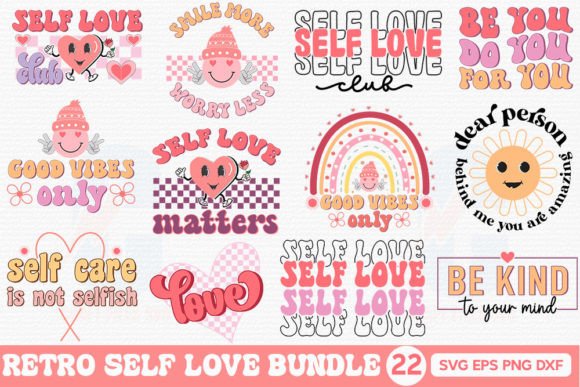
Opening a design bundle for the first time tells you a lot about what a publisher was thinking when they assembled it. With the Retro Self-love SVG Bundle, the immediate feeling is warm, slightly nostalgic, and unapologetically affirmative. This is not a generic clip-art collection thrown together for quick sales. It feels curated for content creators who understand that visual tone directly shapes how readers feel the moment they land on a page. The retro curves, the typography choices, and the gently bold iconography all point toward one clear editorial mood: accessible self-care presented through a lens that feels like a 1970s magazine spread met a modern lifestyle blog.
As someone who builds blog visuals and digital editorial layouts every week, I look for assets that communicate mood before a single headline is read. This bundle does that. The color palettes implied in the designs lean toward earthy mustard, warm terracotta, soft blush, and muted teal territory. That palette alone signals a particular readership, one interested in wellness without clinical coldness, in personal growth without corporate sterility. For a content website focused on mental health, body positivity, journaling, mindfulness, or creative self-expression, the Retro Self-love SVG Bundle arrives as a ready-made visual language.
What You Actually Receive in This Bundle
Before diving deeper into publishing applications, it helps to know exactly what lands in your download folder. The Retro Self-love SVG Bundle arrives as a single compressed zip containing a well-organized set of files. Specifically, you get 22 distinct designs, each provided in four practical formats: SVG, EPS, PNG, and DXF. That is 88 total files, structured so designers, publishers, and crafters each have the format their workflow demands.
The SVG files remain scalable without quality loss, which matters enormously for website headers and large-format editorial graphics. The EPS files open smoothly in professional vector editing software for those who need to customize every curve. The PNG files offer immediate drag-and-drop functionality for quick blog graphics, newsletter banners, or Canva layouts. The DXF files extend the bundle into physical product territory, which opens up merchandise possibilities that I will touch on later in this review.
The Editorial Mood This Graphic Design Asset Creates
Every time I test a new graphic design asset for blog use, I place it inside a real content layout before forming an opinion. I imported several PNG files from the Retro Self-love SVG Bundle into a sample wellness article draft with a serif-heavy headline and soft lifestyle photography. The designs settled into the layout naturally, adding visual rhythm without screaming for attention. The retro styling carries enough personality to feel distinctive, yet remains restrained enough to work as editorial accents rather than dominating the content.
This balance is rare. Many self-love themed design assets veer into overly script-heavy, excessively feminine territory that can alienate broader readerships. The retro approach here broadens the appeal. A male reader browsing a mental health blog, for example, might feel more welcomed by geometric retro warmth than by flowing watercolor florals. The designers understood that self-love as a concept transcends gender, age, and aesthetic preference. The retro treatment gives the message weight and a touch of timelessness.
Where This Bundle Shines in a Publishing Workflow
Let me walk you through the specific places where the Retro Self-love SVG Bundle performs strongest in real content publishing scenarios. These observations come from testing the designs inside actual blog layouts, newsletter templates, and social media preview environments.
Featured Images and Blog Headers
For website headers and featured images, the SVG files provide clean, crisp scaling across screen sizes. I placed one of the retro heart designs as a subtle background element behind a headline for a self-care article, and the result looked professionally designed within minutes. The visual hierarchy held: headline text remained readable, the graphic added context, and the overall impression suggested a publication that invests in editorial quality. Readers notice this, even subconsciously. A polished featured image signals credibility before the first paragraph is read.
Pinterest Pins and Social Media Graphics
Pinterest remains a primary traffic driver for lifestyle, wellness, and creativity-focused blogs. The Retro Self-love SVG Bundle practically designs Pinterest pins for you. The bold shapes and retro typographic elements work perfectly at pin dimensions, where clarity and emotional resonance must register within a fraction of a second. I tested several designs as pin backgrounds with overlaid text, and the click-through potential feels substantially higher than with generic stock photo backgrounds. The retro aesthetic currently enjoys strong engagement on visual platforms, making these designs timely without feeling trend-chasing.
Newsletter Headers and Lead Magnets
Email newsletters suffer from visual fatigue. Subscribers scroll quickly through crowded inboxes. Adding a small, distinctive graphic as a newsletter header or inside a digital download can increase recognition and perceived value. The PNG files from this bundle work beautifully as newsletter accents. For lead magnets such as self-care checklists, journaling prompts, or digital guides, the designs add a layer of polish that transforms a simple PDF into something that feels like a premium editorial resource.
Downloadable Printables and Digital Products
Many content creators now offer printable worksheets, affirmation cards, or digital planners as content upgrades or paid products. The Retro Self-love SVG Bundle supplies design elements purpose-built for this exact use. The self-love theme naturally suits journaling pages, gratitude logs, and mental health trackers. Having 22 designs to choose from means variety across multiple downloads without repetitive visuals. Your printable affirmation card set can carry consistent branding while each card feels individually considered.
Understanding the T-Shirt Designs and Graphics Crossover
The inclusion of DXF format files signals that this bundle was not created solely for digital publishers. These files open directly in cutting machine software, making the designs usable for heat transfer vinyl, screen printing, and physical merchandise creation. For a blogger or publisher who also sells branded merchandise or wants to expand into a product line, this crossover value matters. The same retro self-love graphic that appears in a blog header can live on a physical tote bag, t-shirt, or mug sold through a small online shop.
This dual-purpose nature positions the bundle within the T-Shirt Designs category without limiting it there. A digital publisher can use the PNG and SVG files for web content while the DXF files wait for a product launch down the road. The Graphics classification remains accurate across both use cases. Few design assets serve both audiences well. This one does.
Visual Consistency and Brand Identity Benefits
One of the hardest challenges for independent publishers is maintaining visual consistency across platforms. A blog might have one aesthetic, the Instagram feed another, and the newsletter yet another. The Retro Self-love SVG Bundle helps solve this fragmentation because all 22 designs share a unified retro illustration style, consistent line weight, and harmonious color sensibility. When you pull from the same design family for every visual touchpoint, readers begin to recognize your content instantly, whether they encounter it on a Pinterest feed, a website category page, or a morning email.
Brand identity grows through repetition of distinct visual elements. Scattering these retro self-love graphics across content upgrades, article thumbnails, and social media templates builds a visual signature that competitors cannot easily replicate. The designs feel specific enough to become synonymous with a particular publication over time.
Where Caution Is Warranted
No design asset works everywhere. I tested the Retro Self-love SVG Bundle in several contexts where the fit felt forced. On text-heavy blog images with multiple headline layers, the retro designs competed for attention and created visual noise. On websites with a stark, minimalist corporate identity, the warm retro shapes clashed rather than complemented. For niches such as legal advice, financial planning, or technical tutorials, the self-love messaging and retro styling may confuse reader expectations.
Small mobile thumbnails present another challenge. Some of the more detailed designs lose legibility when scaled down aggressively. Always preview how a graphic reads at 150 by 150 pixels before committing it to a category thumbnail or related post widget. Low-contrast backgrounds also mute the designs significantly. The retro palette tends toward medium saturation, which means it can wash out against beige, pale pink, or light gray website backgrounds if not carefully placed.
Practical Publisher Notes Before You Publish
After working with this bundle across several mock publishing scenarios, I have compiled practical notes that will save you time and protect your content quality:
- Test on both desktop and mobile screens. A design that looks stunning on a 27-inch monitor may feel overwhelming or illegible on a phone display. Resize and preview accordingly.
- Check thumbnail readability. Shrink the graphic to blog thumbnail size and assess whether the core visual still communicates clearly. If not, choose a simpler design from the bundle for thumbnail use.
- Preview inside a real blog layout. Do not evaluate these designs in isolation. Place them into an actual article template with headline text, body copy, and surrounding elements before judging their effectiveness.
- Test with multiple font pairings. The retro designs should be placed beside serif, sans serif, script, handwritten, and display fonts to see which pairings feel intentional rather than accidental. I found that serif headlines and clean sans serif body text created the most balanced editorial look, while script fonts sometimes clashed with the retro curves.
- Review contrast and readability. If you overlay text on these graphics, ensure sufficient contrast. Light text on the lighter retro elements will fail accessibility checks and frustrate readers.
- Try black and white conversion. Some publishers need graphics that work in print or in email clients that strip color. Convert a few designs to grayscale and verify they still hold visual interest.
- Compress PNG files for web performance. Large image files slow down page loading and hurt SEO. Run the PNG exports through an image compressor before uploading to your website.
- Confirm commercial licensing. Before placing these designs on monetized websites, affiliate pages, or paid digital products, verify that the commercial license covers your intended use. Most bundles in creative marketplaces allow commercial digital use, but always read the specific terms.
How This Bundle Supports Content Performance
Visual assets do more than decorate. They directly influence reader behavior. A stronger first impression keeps a visitor on the page long enough to read the headline. Clearer visual hierarchy guides the eye toward calls to action. Consistent branding across blog graphics, social media pins, and newsletter headers builds the trust that converts casual readers into subscribers and buyers. The Retro Self-love SVG Bundle supports each of these performance goals without requiring advanced design skills from the publisher.
For affiliate marketers, the polished appearance these graphics provide can subtly lift conversion rates. A product recommendation placed inside a beautifully designed digital guide feels more credible than the same recommendation inside a plain text document. Readers judge the quality of your content partly by how professionally it is presented. These design assets help close the gap between amateur blog visuals and the kind of editorial design readers expect from established publications.
Category Recognition and Visual Identity
Websites with strong category recognition make navigation intuitive. When every article in a wellness category carries a consistent graphic style, readers quickly learn to identify content by visual cues alone. The Retro Self-love SVG Bundle can define the look of an entire content category. Assign distinct designs from the bundle to different sub-topics like journaling, mindfulness, affirmations, and self-care routines. Over time, returning visitors will associate specific graphics with specific content types, improving site usability and reader satisfaction.
Working With Canva and Other Design Platforms
The PNG and SVG files from this bundle integrate smoothly into Canva, which remains the dominant design platform for bloggers and small business owners. Drag a retro self-love graphic into a Canva template, add your branded headline text, and export a Pinterest-ready pin within minutes. The SVG format preserves editability inside Canva Pro for those who need to recolor elements to match brand palettes. This flexibility makes the bundle accessible to publishers at every skill level, from complete beginners to experienced designers building custom editorial templates.
Final Thoughts From a Publisher's Perspective
After testing the Retro Self-love SVG Bundle across blog headers, Pinterest pins, newsletter graphics, printable worksheets, and social media templates, I can recommend it confidently for content creators whose work touches self-care, wellness, personal development, creativity, or body-positive lifestyle topics. The retro aesthetic gives the designs editorial weight that softer, more conventionally feminine self-love graphics often lack. The file format variety ensures practical usability across digital publishing, print projects, and even merchandise production.
The bundle succeeds because it solves a real publishing need: the gap between wanting visually cohesive, emotionally resonant blog graphics and lacking the time or budget to commission custom illustrations. For a one-time investment, a publisher gains 22 distinct designs that can populate months of content across multiple platforms. Used thoughtfully, these design assets will strengthen visual identity, improve reader trust, and give your content the polished, clickable presentation that modern audiences expect.