100 Days of Growing: A Designer's Embroidery Review
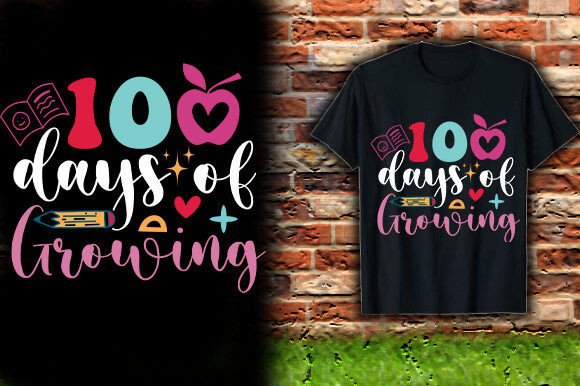
Opening up the 100 DAYS of GROWING TSHIRT DESIGN file for the first time, I immediately felt a gentle, optimistic energy. It is not loud or flashy. Instead, it carries a soft, milestone-focused personality that would resonate deeply with parents, teachers, gardeners, and anyone celebrating steady progress. The theme of growth—gradual, natural, and meaningful—gives this design a warm emotional pull that many commercial Graphics files simply do not achieve. As someone who has evaluated hundreds of design assets for real embroidery work, I can tell when a motif will actually connect with customers, and this one has that rare quality.
The composition relies on clean, readable shapes and a layout that breathes well. Because the product description confirms it is made with 100 resizable vector shapes and fully editable in EPS 10 and SVG, I know the bones of this design are solid. When I think about translating it into a machine embroidery design, the vector foundation matters enormously. Clean anchor points and smooth curves lead to cleaner digitizing, fewer unnecessary trims, and a crisper finished stitch. A motif built on 100 distinct, editable shapes gives me control. If a certain leaf or letterform feels too dense for a satin stitch, I can adjust it before the digitizing process even begins. That flexibility is practical gold for an embroidery professional.
First Impression: Soft, Optimistic, and Surprisingly Versatile
What strikes me most about 100 DAYS of GROWING TSHIRT DESIGN is its quiet versatility. The visual language avoids being pinned to a single season or event. Growth is universal. It could mean a baby's first hundred days, a classroom milestone, a gardening journey, a recovery path, or a small business anniversary. That broad emotional range makes the design far more useful across a product line than a hyper-specific holiday graphic. For an Etsy seller or a craft business owner, owning a design asset that speaks to multiple occasions means fewer files to buy and more listing possibilities from a single investment.
The mood is gentle but not fragile. The shapes have enough structure that I can envision them holding up well as an embroidered patch or stitched onto a structured tote. At the same time, the organic, growing motif softens it enough for baby embroidery, nursery pillows, or a delicate kitchen towel. That balance between crispness and softness is exactly what I look for when evaluating a T-Shirt Designs asset that will eventually live as thread on fabric rather than ink on a screen.
Where This Design Naturally Belongs in an Embroidery Project
Let me walk you through a real scenario. I am currently preparing a small collection of custom apparel pieces for a boutique client who specializes in baby shower gifts and first-year memory items. She wanted something that could work on a soft cotton sweatshirt, a muslin blanket, and a canvas tote bag—all in the same product drop. I pulled up 100 DAYS of GROWING TSHIRT DESIGN and tested how it would adapt across those three very different surfaces. On the sweatshirt, the design felt like a gentle chest emblem, understated and meaningful. On the muslin blanket, it took on an heirloom quality, as if documenting a quiet family milestone. On the tote, it transformed into a wearable affirmation for a new mom. That kind of chameleon behavior, without losing its core personality, is rare in a single Graphics asset.
For a custom embroidered tote bag, this design would sit beautifully centered on the front panel. The growth theme aligns perfectly with everyday carry items—there is something poetic about carrying a bag that celebrates progress. I also imagine it on a zip-up hoodie, stitched across the back shoulders for a boutique look. For a sweatshirt embroidery project aimed at teachers or early childhood educators, this motif would resonate powerfully. One hundred days of school is a classic milestone, and this design frames it with heart rather than cartoonish illustration.
Other natural homes for this embroidery project include pillow covers for a child's reading nook, aprons for a gardener who documents the growing season, and tea towels for a kitchen that celebrates small daily wins. The design also holds promise as a holiday embroidery gift—imagine it stitched on a linen pillow cover for a friend who has weathered a tough year and is slowly growing into a new chapter. The emotional layering gives it staying power beyond a single trend.
Where You Should Use the Design Carefully
No design is perfect everywhere, and 100 DAYS of GROWING TSHIRT DESIGN deserves an honest look at its limits. The vector file is described as easy to modify and change the color, which is excellent, but embroidery introduces physical constraints that even the best vector artwork must respect. If the design contains fine detail work, delicate line elements, or tight letterforms, those areas will need special attention during digitizing. On a small hoop size—say a 4x4 inch field—intricate growth motifs with many small leaves or thin stems could become muddy. I would strongly recommend testing the design at actual stitch size on scrap fabric before committing to a final product run.
Textured fabrics like terry cloth, waffle weave, or heavy knit can disrupt the clean lines of a growth-themed design. If you are planning to stitch 100 DAYS of GROWING TSHIRT DESIGN onto a plush bath towel or a chunky sweater, use a heavy water-soluble topper to keep the surface stitches crisp. Without it, thin lettering and delicate botanical shapes can sink into the pile and lose definition. The same caution applies to highly stretchy fabrics. A design that looks flawless on a stable cotton panel may distort on a thin rayon-spandex blend if not hooped with the right no-show mesh stabilizer.
Dark fabrics present another practical hurdle. The design ships as a fully editable vector, so you can recolor it before digitizing, which is a huge advantage. I always check how a motif will read on black, charcoal, and navy. Light, airy growth themes can lose contrast on a dark background unless the thread color palette is adjusted strategically. I would test the design in a black-and-white mockup first, then stitch a sample on a dark swatch with bright, high-contrast thread. This quick step prevents a finished product that looks washed out or illegible.
Curved surfaces like caps and hats also require extra thought. The horizontal spread of a growing motif may not wrap gracefully across a structured baseball cap crown without distortion. If a client requested this design on headwear, I would likely adapt it into a smaller, centered version or an embroidered patch that can be sewn onto the cap rather than stitched directly. Patches offer more control over placement and give the finished item a collectible, handmade appeal.
How the Design Affects Visual Impact and Customer Engagement
From a product value perspective, 100 DAYS of GROWING TSHIRT DESIGN carries a storytelling element that buyers instinctively respond to. A personalized gift featuring this motif does not simply sit on a shelf—it invites questions, shares a sentiment, and creates a memory. When I evaluate a design for my shop, I ask one question above all others: will this make someone feel something when they unbox the product? With this design, the answer is yes. The growth narrative is immediate and warm without being saccharine.
That emotional hook directly affects buyer engagement, giftability, and brand consistency. A small shop selling handmade baby blankets or milestone onesies can build an entire collection around a growth theme, and this design fits seamlessly into that visual world. For Etsy sellers, listings that tell a story tend to convert better than generic product shots. A listing that positions this design as part of a hundred-day celebration set—perhaps with coordinating items like a bib, a blanket, and a keepsake pouch—creates a cohesive shopping experience that boosts average order value.
Presentation matters deeply in the handmade space. A printable mockup using this design on a soft neutral background, styled with natural props like a small plant or wooden beads, communicates thoughtfulness before the buyer even reads the description. Since the vector file is ready to be printed on t-shirts, stickers, apparel, clothing, posters, and more, you can also use it across marketing materials, packaging inserts, and thank-you cards, maintaining a unified brand identity from product to unboxing.
Practical Embroidery Notes Before You Stitch
I have learned through many late-night stitching sessions that the difference between a professional finished product and a disappointing one often comes down to preparation. With 100 DAYS of GROWING TSHIRT DESIGN, I recommend a systematic test routine. Start by printing the design at actual size on paper and placing it on the intended garment. Check the visual weight, the placement height, and the breathing room around the edges. A motif that looks perfectly scaled on a screen can feel oversized on a tiny baby bodysuit or undersized on an adult crewneck.
Next, digitize or have the design digitized with careful attention to stitch density, satin stitch versus fill stitch choices, and running stitch outlines. The hundred resizable vector shapes give you the freedom to simplify or elaborate. If a section feels too dense, adjust it before committing thread. I prefer a mix of satin borders for definition and lighter tatami fills for the interior areas, especially on fabrics that will be washed frequently. Dense fills on thin cotton can pucker, and no amount of stabilizer can fully rescue a design that is simply too heavy for its fabric.
Stabilizer choice is non-negotiable. For a standard sweatshirt or tote bag, a medium-weight cutaway stabilizer gives lasting support without stiffness. For a lightweight onesie or tea towel, a tear-away with a light fusible backing often works well. Test both options. I also recommend comparing light and dark fabric samples side by side with the same thread colors. What reads as delicate and fresh on cream can look flat on heather gray. Adjust thread shades accordingly, and do not be afraid to add a subtle outline for contrast on darker grounds.
Another habit I practice is inspecting the stitched sample under different lighting conditions—natural daylight, warm indoor bulbs, and the cool LED lighting common at craft fairs. The design's legibility should hold up in all three. A growth motif with intricate botanical shapes can lose its detail in low light if the thread contrast is insufficient, and that is a fixable issue when caught early.
Commercial Use, Licensing, and Selling Finished Products
For creative entrepreneurs building a product line around 100 DAYS of GROWING TSHIRT DESIGN, the commercial conversation matters. The product page confirms the file is fully editable vector EPS 10 and SVG and easy to modify and change the color, which gives real creative freedom. However, before listing finished embroidered products or selling the design as part of a digital embroidery bundle, you must verify the license terms directly with the seller. The description does not specify personal versus extended commercial use rights, so I would not assume either. A quick message to the shop or a careful read of the license agreement included with the download protects your business from unintended infringement.
If the license permits commercial finished products, this design becomes a strong asset for a small shop product line. I can picture a craft fair table featuring a coordinated set: an embroidered sweatshirt, a matching baby beanie, a canvas tote, and a set of kitchen towels, all carrying the same growth motif but adapted slightly in color and scale. The vector foundation makes those adaptations feasible without degrading the design quality. That cohesion builds brand recognition and encourages multi-item purchases.
An Honest Designer's Verdict on Day-to-Day Use
After thoroughly examining 100 DAYS of GROWING TSHIRT DESIGN from every angle a working embroidery designer needs to consider, I find it to be a genuinely useful and emotionally intelligent design asset. It is not a throwaway trend graphic. It has the kind of staying power that lets a shop owner use it season after season, repurposing it for baby gifts, teacher appreciation items, garden club merchandise, and personal milestone keepsakes. The vector quality is clean, the editability is real, and the theme resonates across a wide range of customers.
The design forces you to think carefully about scale, fabric choice, and color planning—but those are the same skills that elevate any embroidery project from average to outstanding. It rewards attention to detail. Stitch it thoughtfully on a quality blank, pair it with packaging that echoes the growth narrative, and you have a product that feels intentional and valuable. Whether you are a solo maker preparing a personalized gift for a friend's new baby or a seasoned shop owner expanding your custom apparel collection, 100 DAYS of GROWING TSHIRT DESIGN earns its place in your embroidery design library through quiet versatility and genuine emotional appeal.
Test it on scrap fabric. Match your thread with care. Respect the licensing terms. And then let this design do what a great embroidery motif does best: turn an ordinary piece of fabric into something that tells a story worth keeping.